



Principles, Applications, and Analytical Value
Introduction to CD Circular Dichroism
CD circular dichroism is a spectroscopic technique widely used to analyze the structural and conformational properties of chiral molecules, particularly biomolecules such as proteins, peptides, and nucleic acids. The method measures the differential absorption of left- and right-handed circularly polarized light, providing direct insight into molecular asymmetry and secondary structure. Researchers rely on CD circular dichroism because it delivers rapid, non-destructive measurements under near-physiological conditions.
Fundamental physical principles
CD circular dichroism operates on the principle that chiral molecules interact differently with circularly polarized light depending on their three-dimensional arrangement. When polarized light passes through a sample, the molecule absorbs each polarization to a slightly different extent. The instrument detects this difference and reports it as ellipticity or molar circular dichroism. These values correlate with structural features such as helices, sheets, and random coils, enabling detailed structural interpretation.
Instrumentation and measurement process
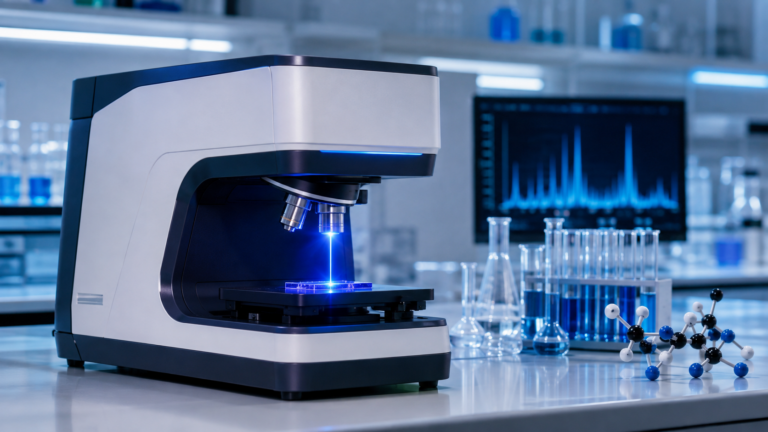
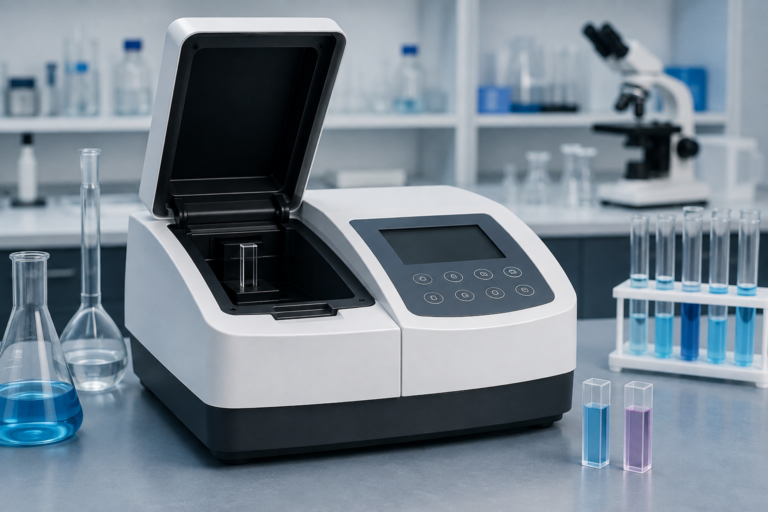
Modern CD circular dichroism systems consist of a light source, monochromator, polarizer, photoelastic modulator, sample holder, and detector. The instrument alternates polarization at high frequency and records the absorption difference across selected wavelengths. Users prepare samples in quartz cuvettes and maintain controlled temperature and buffer conditions to ensure reliable and reproducible results. Careful calibration and baseline correction improve measurement accuracy.
Applications in protein analysis
CD circular dichroism plays a central role in protein characterization. Scientists use it to estimate secondary structure content, monitor folding and unfolding processes, and evaluate stability under varying environmental conditions. The technique also supports comparison between native and modified proteins, detection of aggregation, and assessment of conformational changes during ligand binding. These capabilities make it valuable in both academic research and pharmaceutical development.
Use in nucleic acids and other biomolecules
Beyond proteins, CD circular dichroism supports the study of DNA, RNA, and other chiral systems. It helps determine helix type, strand interactions, and structural transitions induced by temperature, pH, or chemical agents. Researchers also apply the method to carbohydrates, polymers, and supramolecular assemblies where chirality influences function and behavior.
Advantages and practical benefits
CD circular dichroism offers several operational advantages. It requires relatively small sample volumes, delivers fast data acquisition, and preserves sample integrity. The technique works in solution, allowing measurements under realistic biological conditions. These features enable continuous monitoring of structural changes without extensive preparation or complex instrumentation.
Limitations and considerations
Despite its strengths, CD circular dichroism provides indirect structural information and typically complements other techniques such as NMR spectroscopy, X-ray crystallography, or fluorescence analysis. Signal quality depends on sample purity, buffer composition, and concentration. Users must control these parameters carefully to avoid artifacts and misinterpretation.
Role in modern research and development
Today, CD circular dichroism serves as a routine analytical tool in biotechnology, drug discovery, and structural biology laboratories. It supports quality control, formulation studies, and stability testing, offering rapid confirmation of molecular integrity. Its combination of sensitivity, speed, and versatility continues to make it a practical and reliable method for structural characterization.
Conclusion
CD circular dichroism provides a scientifically robust approach for investigating the structure and behavior of chiral molecules. By translating optical activity into meaningful structural data, the technique helps researchers understand molecular function and stability. When applied correctly and interpreted alongside complementary methods, it delivers valuable insights that support both fundamental research and applied science.