Principles, Applications and Laboratory Selection
A Raman Spectrometer is an analytical instrument used to identify and characterize materials by measuring how monochromatic light interacts with molecular vibrations. Raman spectroscopy provides detailed chemical and structural information while often requiring little or no sample preparation, making it a valuable technique for research, quality control, pharmaceutical laboratories and industrial analysis.
For laboratories evaluating spectroscopy equipment, understanding how Raman technology works, where it performs best and which system configuration matches the analytical requirement is essential. Instrument selection should consider the sample type, required spectral range, sensitivity, laser wavelength, fluorescence behavior and the laboratory’s routine workflow.
What Is a Raman Spectrometer?
A Raman Spectrometer measures the Raman effect, a phenomenon in which a very small portion of light scattered by a sample changes in energy after interacting with its molecules.
Most of the incident light is scattered without changing energy. This is known as Rayleigh scattering. A much smaller fraction undergoes an energy shift related to molecular vibrations. These shifts produce a Raman spectrum that can act as a chemical fingerprint of the material.
The resulting spectrum can provide information about:
- Molecular structure
- Chemical composition
- Functional groups
- Crystalline forms
- Material identity
- Molecular interactions
- Structural changes
Because every material can produce a characteristic spectral response, Raman spectroscopy is particularly useful for qualitative identification and material characterization.
How Does a Raman Spectrometer Work?
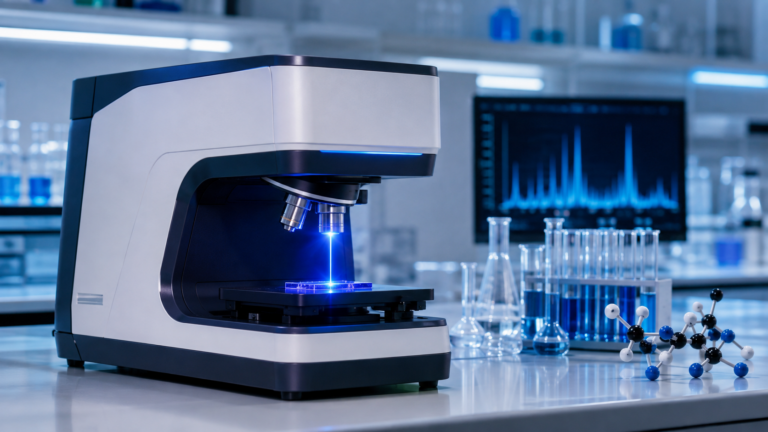
A typical Raman system uses a laser as a monochromatic light source. The laser is focused onto the sample, and the scattered light is collected by the optical system.
The instrument then separates the weak Raman-scattered light from the much stronger Rayleigh-scattered component before directing it to a spectrograph and detector.
Main Components of a Raman System
A typical instrument includes several important components:
- Laser excitation source
- Optical focusing system
- Sample interface
- Filters for Rayleigh light rejection
- Spectrograph
- Sensitive detector
- Data acquisition and analysis software
The performance of the complete system depends on how well these components are matched to the laboratory application.
What Information Can Raman Spectroscopy Provide?
One of the main advantages of Raman spectroscopy is its ability to provide molecular-level information without necessarily destroying or chemically modifying the sample.
A Raman spectrum contains peaks at specific Raman shifts. Their positions and intensities are related to the vibrational modes of the molecules being analyzed.
This information can be used for several analytical purposes.
Material Identification
Raman spectra can be compared with reference spectra or spectral libraries to identify unknown materials.
This is useful for:
- Raw material verification
- Chemical identification
- Polymer analysis
- Pharmaceutical ingredient identification
- Research applications
Structural Characterization
Changes in molecular structure can result in changes in the Raman spectrum. The technique can therefore help researchers investigate structural differences, molecular interactions and material transformations.
Crystalline and Polymorphic Analysis
In pharmaceutical and materials laboratories, different crystalline forms of the same compound can have different physical properties.
Raman spectroscopy can help distinguish between polymorphs because changes in molecular arrangement may produce measurable differences in the Raman spectrum.
Raman Spectrometer Applications in Analytical Laboratories
The versatility of a Raman Spectrometer makes it useful across a wide range of laboratory environments.
Pharmaceutical Analysis
Raman spectroscopy can support several pharmaceutical analytical workflows, particularly where rapid material identification and minimal sample preparation are advantageous.
Possible applications include:
- Raw material identification
- Active pharmaceutical ingredient analysis
- Excipient identification
- Polymorph characterization
- Formulation research
- Process monitoring
- Pharmaceutical research and development
For pharmaceutical laboratories, Raman analysis may complement chromatography, dissolution testing and other analytical techniques rather than replace them.
Chemical and Material Analysis
Raman spectroscopy can provide valuable information about organic and inorganic materials.
Applications may include:
- Chemical identification
- Polymer characterization
- Pigment analysis
- Mineral analysis
- Material research
- Coating evaluation
- Contaminant investigation
The ability to analyze solids, powders, liquids and other sample formats makes the technique adaptable to many research and industrial workflows.
Academic and Research Laboratories
Research laboratories often use Raman spectroscopy because it enables detailed molecular characterization while supporting a broad range of experimental configurations.
Depending on the instrument configuration, researchers may investigate:
- Molecular interactions
- New materials
- Chemical reactions
- Surface properties
- Semiconductor materials
- Nanomaterials
- Biological samples
Industrial Quality Control
A Raman Spectrometer can also be incorporated into quality control workflows where rapid identification or comparison against known material specifications is required.
The suitability of Raman technology for a specific QC application should always be evaluated according to sample characteristics, validation requirements and the required level of analytical performance.
Key Advantages of Raman Spectroscopy
Raman spectroscopy provides several practical advantages for analytical laboratories.
Minimal Sample Preparation
Many samples can be measured with little or no chemical preparation. This can reduce preparation time and simplify certain analytical workflows.
Non-Destructive Analysis
In many applications, Raman measurements can be performed without destroying the sample, allowing it to remain available for additional testing.
Molecular Fingerprint Information
Raman spectra contain detailed molecular information that can support confident material identification and comparison.
Flexible Sample Types
Depending on the instrument and accessory configuration, Raman spectroscopy can be used with:
- Solids
- Powders
- Liquids
- Crystals
- Polymers
- Pharmaceutical materials
- Various research samples
Water Interference Can Be Relatively Low
Compared with some other vibrational spectroscopy techniques, water often produces a relatively weak Raman signal. This can make Raman useful for certain aqueous samples and formulations.
Limitations to Consider
Although Raman spectroscopy is powerful, it is not the ideal technique for every sample.
One of the most important challenges is fluorescence. Some materials generate strong fluorescence when exposed to a particular laser wavelength, potentially masking the weaker Raman signal.
Other practical considerations include:
- Weak Raman scattering intensity
- Potential laser-induced sample heating
- Fluorescence background
- Instrument configuration requirements
- Sample-specific optimization
- Sensitivity limitations for some applications
These factors make correct instrument configuration especially important.
How to Choose a Raman Spectrometer
Selecting the right system should begin with the analytical application rather than with instrument specifications alone.
Laboratories should define what they need to measure, the types of samples involved and the expected workflow before comparing systems.
1. Define the Sample Type
Start by identifying the materials that will routinely be analyzed.
Consider whether the laboratory works mainly with:
- Powders
- Liquids
- Pharmaceutical materials
- Polymers
- Minerals
- Biological materials
- Research samples
- Industrial materials
Sample characteristics can strongly affect the appropriate laser, optics and accessories.
2. Select the Appropriate Laser Wavelength
Laser wavelength is one of the most important configuration decisions.
Common Raman excitation wavelengths include visible and near-infrared options. Different wavelengths can produce different balances between Raman signal strength, fluorescence reduction and spatial resolution.
A sample that produces excessive fluorescence with one wavelength may perform significantly better with another.
3. Determine the Required Spectral Range
The laboratory should determine which Raman shifts are important for its application.
Some applications focus on conventional molecular fingerprint regions, while others may require access to lower or higher Raman shifts.
Choosing the appropriate spectral range ensures that the instrument captures the information required by the analytical method.
4. Evaluate Sensitivity and Resolution
Higher spectral resolution can help distinguish closely spaced Raman bands, but not every routine application requires the highest available resolution.
The correct balance should be determined according to:
- Sample complexity
- Identification requirements
- Expected peak separation
- Measurement speed
- Required sensitivity
- Research or routine QC use
5. Consider the Sampling Configuration
Different laboratories require different sample interfaces.
Depending on the application, possibilities may include:
- Standard sample compartments
- Microscope-based Raman systems
- Fiber-optic probes
- Remote sampling
- Specialized holders
- Temperature-controlled accessories
The sampling configuration should fit the laboratory workflow rather than force the laboratory to adapt its process around the instrument.
Raman Spectrometer vs Other Analytical Techniques
Raman spectroscopy is often most effective when used as part of a broader analytical toolbox.
Raman Spectroscopy vs Chromatography
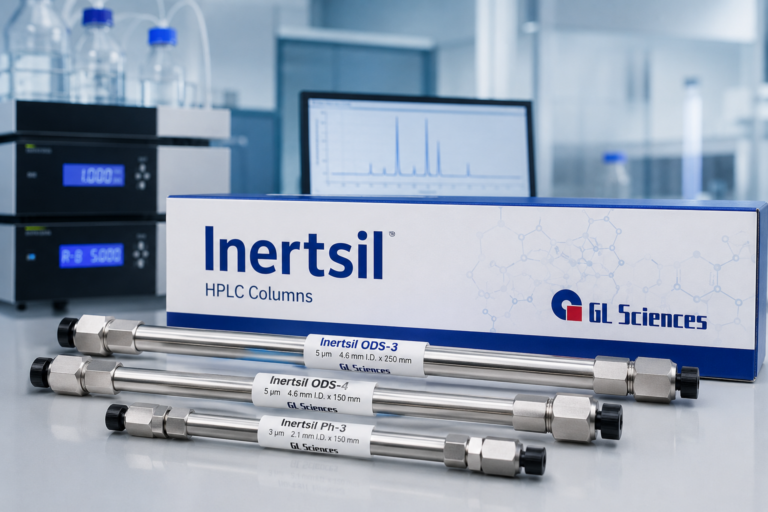
Chromatography techniques such as HPLC and GC physically separate components before detection, making them highly important for complex mixtures and quantitative analytical workflows.
Raman spectroscopy generally analyzes molecular vibrations directly without chromatographic separation.
For many laboratories, the techniques are complementary.
Raman vs UV-Vis Spectroscopy
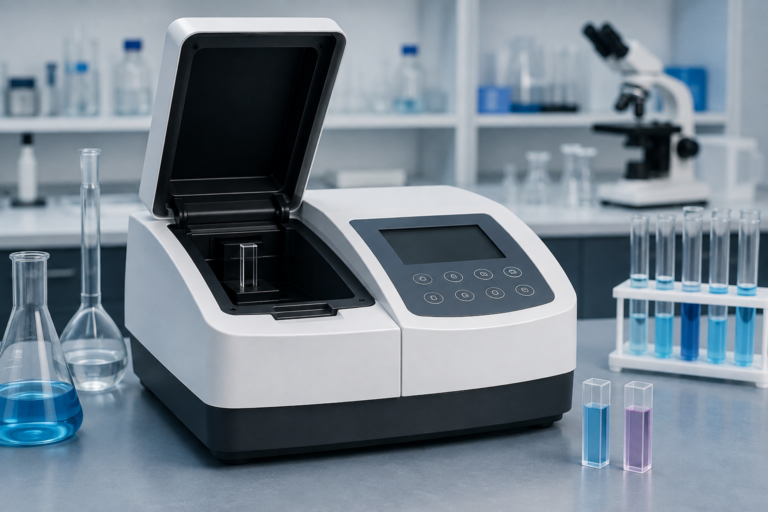
UV-Vis spectroscopy measures absorption of ultraviolet and visible light and is widely used for quantitative concentration measurements.
Raman spectroscopy provides vibrational information and can deliver a more characteristic molecular fingerprint for material identification and structural analysis.
The most suitable technique depends on the analytical objective.
Raman Spectroscopy in a Complete Analytical Workflow
Choosing analytical equipment should rarely be based on a single instrument in isolation.
A laboratory may combine spectroscopy with:
- Chromatography
- HPLC or UPLC
- GC
- Sample preparation equipment
- Pharmaceutical testing systems
- Other spectroscopy methods
- Laboratory consumables
For this reason, instrument selection should consider how the Raman system will integrate with existing analytical methods and laboratory procedures.
Why Application Support Matters
A Raman Spectrometer should be selected according to the actual analytical application, not simply according to a list of technical specifications.
Important questions include:
- What samples will be analyzed?
- Is fluorescence expected?
- What level of spectral resolution is required?
- Is microscopic analysis needed?
- Is routine identification or advanced research the primary goal?
- What throughput is expected?
- How will results be evaluated?
- Which additional analytical techniques are already used in the laboratory?
Professional application guidance can help laboratories match instrument configuration to real workflow requirements and avoid unnecessary specifications or unsuitable configurations.
Raman Spectrometer Solutions for Laboratories in Israel
Laboratories in pharmaceutical, industrial, academic, research and quality control environments often require more than the analytical instrument itself. Selection support, suitable accessories, application understanding and professional technical service can all influence long-term workflow reliability.
Ophir Analytical provides analytical instrumentation and professional application-oriented support for laboratories in Israel across areas including spectroscopy, chromatography, HPLC and GC solutions, sample preparation and pharmaceutical laboratory equipment.
Laboratories considering Raman spectroscopy should evaluate the system according to their samples, analytical objectives and existing laboratory workflow before making a purchasing decision.
Frequently Asked Questions About Raman Spectrometers
What is a Raman Spectrometer used for?
A Raman Spectrometer is used to obtain molecular and structural information from a sample by measuring Raman scattering. Common applications include material identification, pharmaceutical analysis, polymer characterization, crystalline form analysis, chemical research and quality control.
Does Raman spectroscopy require sample preparation?
Many Raman measurements require little or no sample preparation. However, preparation requirements depend on the sample, instrument configuration and analytical objective. Some applications may still require controlled sampling procedures to obtain repeatable results.
Is Raman spectroscopy destructive?
Raman spectroscopy is commonly considered a non-destructive analytical technique. However, high laser power or sensitive samples may cause heating or degradation, so appropriate measurement conditions should always be selected.
What is the best laser wavelength for Raman analysis?
There is no single wavelength that is best for every sample. The appropriate wavelength depends on fluorescence, Raman scattering efficiency, sample sensitivity, spatial resolution and the analytical application.
Can Raman spectroscopy replace HPLC or GC?
Generally, no. Raman spectroscopy, HPLC and GC provide different types of analytical information. Raman is particularly valuable for molecular identification and structural characterization, while chromatography is essential when components must be separated and individually measured.
How should a laboratory choose a Raman Spectrometer?
Selection should consider sample type, laser wavelength, fluorescence behavior, spectral range, sensitivity, resolution, sampling configuration and required laboratory throughput. Application requirements should be defined before comparing instrument specifications.
Choosing the Right Raman Spectrometer for Your Application
A Raman Spectrometer can provide laboratories with rapid molecular identification, structural information and flexible sample analysis with minimal preparation. However, successful implementation depends on choosing the right combination of laser wavelength, optics, detector, spectral range and sampling accessories.
Rather than focusing only on instrument specifications, laboratories should evaluate the complete analytical workflow and define the measurement objective before selecting a system.
For laboratories looking for professional guidance on spectroscopy and analytical laboratory equipment, Ophir Analytical can help evaluate analytical requirements and identify an appropriate solution for the intended application.