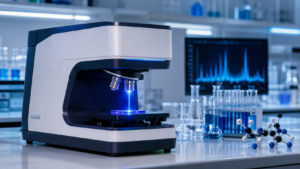
Raman Spectrometer
Principles, Applications and Laboratory Selection A Raman Spectrometer is an analytical instrument used to identify and characterize materials by measuring how monochromatic light interacts with molecular vibrations. Raman spectroscopy provides detailed chemical and structural information while often requiring little or no sample preparation, making it a valuable technique for research, quality control, pharmaceutical laboratories and industrial analysis. For laboratories evaluating spectroscopy equipment, understanding how Raman technology works, where it performs best and which system configuration matches the analytical requirement is essential. Instrument selection should consider the sample type, required spectral range, sensitivity, laser wavelength, fluorescence behavior and the laboratory’s routine workflow. What Is a Raman Spectrometer? A Raman Spectrometer measures the Raman effect, a phenomenon in which a very small
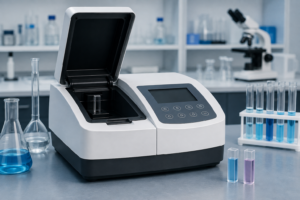
Spectrophotometer
A Practical Guide for Analytical Laboratories A spectrophotometer is one of the most widely used analytical instruments for measuring how a sample interacts with light. It is commonly used in quality control, research, pharmaceutical, chemical, environmental, industrial, and academic laboratories for quantitative and qualitative analysis. By measuring the amount of light absorbed or transmitted by a sample at specific wavelengths, a spectrophotometer can help laboratories determine concentration, monitor reactions, evaluate material properties, and support repeatable analytical workflows. For laboratories choosing spectroscopy equipment, however, the measurement principle is only part of the decision. Wavelength range, sample type, sensitivity, optical configuration, software, throughput, and application requirements can all influence which instrument is most suitable. What Is a Spectrophotometer? A spectrophotometer is an
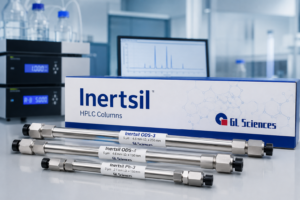
Inertsil HPLC Columns
A Professional Guide to Selection, Performance, and Applications Inertsil is an established family of high-performance liquid chromatography columns developed by GL Sciences for analytical and preparative separation workflows. The product range includes several stationary-phase chemistries for reversed-phase chromatography, HILIC, normal-phase chromatography, size-exclusion applications, and other specialized separation modes. Choosing the correct Inertsil column can have a major effect on chromatographic selectivity, analyte retention, peak shape, resolution, operating pressure, run time, and overall method robustness. For this reason, column selection should never be based only on the label “C18” or on column dimensions. The stationary-phase chemistry, silica properties, particle size, pore size, carbon loading, pH range, mobile phase, and chemical characteristics of the sample must all be considered. What Is Inertsil?
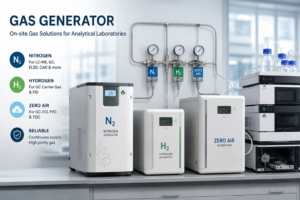
Gas Generator for Analytical Laboratories
A Complete Selection Guide A gas generator provides laboratories with a controlled supply of gas directly at the point of use. Instead of depending entirely on delivered cylinders, the system produces nitrogen, hydrogen, zero air or another required gas on demand. Laboratory gas generators are commonly matched to analytical applications such as GC, GC-MS, LC-MS, CAD, ELSD, ICP-MS, FT-IR, sample preparation and TOC analysis. The correct solution depends on the instrument, required gas purity, operating pressure, flow rate and expected laboratory workload. For analytical laboratories, gas quality is not only a utility consideration. Stable pressure, suitable purity and sufficient flow can directly influence instrument operation, workflow continuity and the consistency of analytical measurements. What Is a Gas Generator? A gas
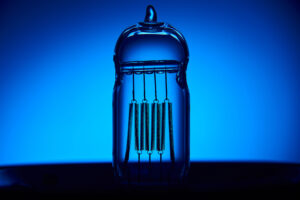
D2 Lamp
What It Is, How It Works, and Why It Matters in UV Analytical Instruments A D2 lamp, also known as a deuterium lamp, is a specialized ultraviolet light source used in analytical instruments such as UV-Vis spectrophotometers, HPLC UV detectors, and diode array detectors. It provides stable UV radiation for absorbance measurements, chromatographic detection, and quantitative laboratory analysis. Because many analytical methods depend on consistent ultraviolet output, the quality and condition of the D2 lamp can directly affect sensitivity, baseline stability, reproducibility, and overall confidence in analytical results. What Is a D2 Lamp? A D2 lamp, also known as a deuterium lamp, is a specialized ultraviolet light source used in analytical instruments such as UV-Vis spectrophotometers, HPLC UV detectors, diode
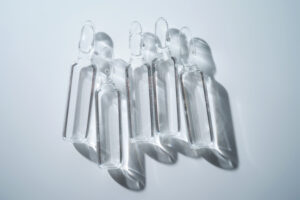
Quartz Cuvette
What It Is, How It Works, and How to Choose the Right One In UV-Vis spectroscopy and optical laboratory analysis, the quality of the measurement depends not only on the instrument itself, but also on the sample holder used during the analysis. For users searching for Cuuvette quartz, the correct professional term is quartz cuvette, one of the most important components in this process. A quartz cuvette is a transparent optical cell designed to hold liquid samples during spectrophotometric measurements. It allows light to pass through the sample while the instrument measures absorbance, transmittance, or other optical properties. Because quartz offers excellent optical transmission in the ultraviolet and visible ranges, quartz cuvettes are widely used in analytical chemistry, pharmaceutical quality
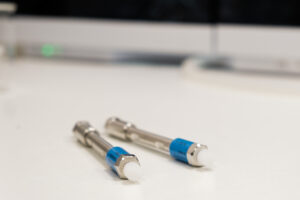
HPLC columns
The core of precise liquid chromatography performance HPLC columns are one of the most important components in any liquid chromatography system because they directly influence separation quality, resolution, reproducibility, and overall analytical performance. On Ophir Analytical’s site, HPLC columns are presented as a key product category within a broader chromatography portfolio that also includes GC columns, sample preparation, and related laboratory solutions. The company also describes itself as a long-standing supplier of analytical instruments and chromatography products since 1991. Why HPLC columns matter so much In practical laboratory work, the column is where the separation actually happens. Even when the instrument, detector, and method are well selected, the quality of the result still depends heavily on the column. Ophir Analytical’s
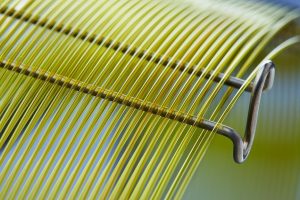
GC Chromatograph for Accurate, Reliable, and Scalable Laboratory Analysis
Why a GC Chromatograph remains essential in modern analytical laboratories A GC Chromatograph is one of the most important instruments in laboratories that need precise separation, identification, and quantification of volatile and semi-volatile compounds. Gas chromatography is widely used across industries such as environmental testing, petrochemicals, pharmaceuticals, food analysis, and industrial quality control because it delivers strong sensitivity, reproducibility, and dependable analytical performance. On Ophir Analytical’s chromatography page, GC systems, GC analyzers, headspace autosamplers, and related software are presented as part of a broader chromatography offering, which fits the needs of laboratories looking for complete analytical solutions rather than a standalone instrument only. What a GC system actually does in day-to-day laboratory work A gas chromatograph works by injecting a
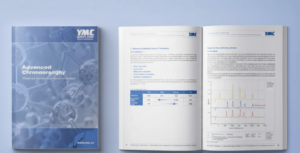
Peptide purification
Turn Peptide Purification into a Competitive Advantage Peptide purification is rarely “just a downstream step” — it often determines whether a process will be productive, robust, and economically viable. With peptides varying widely in size, hydrophobicity, secondary structure, and impurity profiles, a one-size-fits-all approach can quickly lead to low recovery, long cycle times, and costly rework. Our helpful Whitepaper “Strategic Peptide Purification” provides a structured, practice-driven guide to method development using reversed phase chromatography, designed to help you reach your purity and yield targets faster. Boost Yield and Productivity with the Right Selectivity Decisions Instead of generic theory, the Whitepaper walks you through a proven workflow for preparative peptide purification — balancing maximum sample recovery, shortest cycle time, and cost
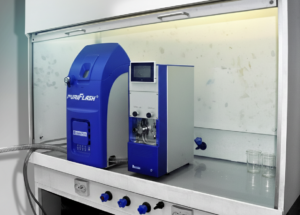
Mass directed purification
Mass-Directed Purification with puriFlash® MS Integrated Mass Spectrometry for Flash and Preparative Chromatography Modern purification workflows require faster decision-making, higher selectivity, and reduced manual analysis. Traditional fraction collection based solely on UV detection often leads to unnecessary solvent evaporation, extended analysis time, and reduced efficiency. Mass-directed purification provides a smarter approach. By integrating a compact mass spectrometer directly with your flash or preparative chromatography system, fractions are collected only when the target molecular mass is detected. The puriFlash MS systems from Interchim Purification Systems enable precise, automated purification using real-time mass detection, delivering improved productivity and higher confidence in compound isolation. What Is Mass-Directed Purification? Mass-directed purification combines chromatography with mass spectrometry to trigger fraction collection based on molecular weight

Glass columns
, Dear LC enthusiasts Optimize your laboratory work with practical, relevant information on glass columns. Our online seminars provide expert knowledge and the opportunity to exchange directly with our specialists. In our Expert Tip, we introduce the YMC HT column line. With its high temperature stability, the YMC HT column line offers new possibilities for efficient method development in hydrophobic interaction chromatography (HIC). Apply these practical tips and new ideas directly in your lab! Register now for our online seminars or get in touch with us directly. We are happy to support you with your applications. Topics of this issue Glass Columns in Action: Practical InsightsYMC HT – Ideal for Hydrophobic Interaction Chromatography All About Glass Columns Glass Columns in

HPLC pore size selection
, Dear HPLC enthusiasts .HPLC pore size selection-In our latest Technical Note, we share practical guidance on selecting the right pore size for RP and NP applications and how you can boost separation performance with the right choice Topics of this issue More productivity for your RP processes!Merry Christmas !Size matters More productivity with the right pore If you’re working with RP or NP, you know: choosing the right pore size is key to achieving optimal productivity and chromatographic performance. The smaller the pore, the larger the specific !surface area — which influences both loading capacity and interaction with your target compound. But remember: your target molecule has to fit into the pore .HPLC pore size selection-Our helpful Technical Note
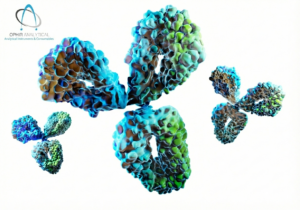
YMC Accura BioPro IEX SF
Recovery from the First Injection and Native IEX-MS Performance YMC Accura BioPro IEX SF delivers reliable recovery from the very first injection while enabling exceptional native IEX-MS performance. Designed for modern biopharmaceutical laboratories, the column supports accurate, MS-compatible ion-exchange analysis with stable baselines, sharp peaks, and dependable results across demanding workflows. Unlock exceptional native IEX-MS performance with YMC Accura BioPro IEX SF This column is engineered to enhance native IEX-MS separations by minimizing nonspecific interactions and maximizing signal clarity. Its optimized design enables cleaner spectra, improved sensitivity, and highly consistent chromatographic behavior, helping laboratories obtain trustworthy data with every analytical run. Sharper peaks, superior resolution, and consistent results Experience sharper peak shapes, higher resolution, and reproducible separations using this column.

Cuvette Quartz
Optical Properties, Performance, and Laboratory Applications Introduction Cuvette quartz refers to a laboratory sample cell manufactured from high-purity quartz glass and designed for precise spectroscopic measurements. Laboratories use these cuvettes in UV, visible, and fluorescence spectroscopy because quartz provides excellent optical transmission and chemical stability. Researchers prefer cuvette quartz when experiments require accurate light passage at short wavelengths where standard glass or plastic materials fail to perform reliably. Material characteristics of Quartz Quartz exhibits superior optical clarity across a broad spectral range, typically from the deep ultraviolet to the near infrared. Unlike regular glass, quartz does not significantly absorb UV radiation, which makes it essential for measurements below 320 nm. Its low thermal expansion, high chemical resistance, and mechanical stability

Chromatography
Principles, Techniques, and Analytical Applications Introduction to Chromatography Chromatography is a fundamental analytical and preparative technique used to separate, identify, and quantify components within complex mixtures. Scientists across chemistry, biology, pharmaceuticals, environmental science, and food testing rely on chromatography to isolate compounds and evaluate their purity. The method enables precise analysis by distributing substances between two phases and exploiting differences in their chemical and physical properties. Core principles Chromatography operates through the interaction of two phases: a stationary phase and a mobile phase. The stationary phase remains fixed in place, while the mobile phase carries the sample through the system. Each compound interacts differently with these phases depending on polarity, size, charge, or affinity. As a result, substances travel at

Tosoh Bioscience
Analytical Chromatography Courses 2026 in Griesheim Discover the key chromatography techniques for biomolecule analysis at our Analytical Chromatography Courses 2026 in Griesheim. Across three focused training days, you’ll gain practical insights into HIC, IEX, SEC, and MALS — from core principles to real-world applications. What’s waiting for you Essential theory and method development across HIC, IEX, SEC & MALSApplication-driven sessions for proteins, mAbs, nucleic acids and delivery particlesData evaluation, troubleshooting and discussion of your own chromatogramsExpert guidance in an interactive workshop setting Choose individual modules or combine them into a value package tailored to your learning goals. Secure your seat today — we look forward to welcoming you! Yours sincerely Dr. Andrea Krumm Chromatography Workshop – Native (U)HPLC Skills Register
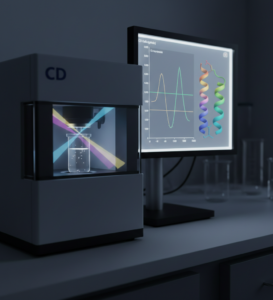
CD Circular Dichroism
Principles, Applications, and Analytical Value Introduction to CD Circular Dichroism CD circular dichroism is a spectroscopic technique widely used to analyze the structural and conformational properties of chiral molecules, particularly biomolecules such as proteins, peptides, and nucleic acids. The method measures the differential absorption of left- and right-handed circularly polarized light, providing direct insight into molecular asymmetry and secondary structure. Researchers rely on CD circular dichroism because it delivers rapid, non-destructive measurements under near-physiological conditions. Fundamental physical principles CD circular dichroism operates on the principle that chiral molecules interact differently with circularly polarized light depending on their three-dimensional arrangement. When polarized light passes through a sample, the molecule absorbs each polarization to a slightly different extent. The instrument detects this

Oligonucleotide Purification Resin
gonucleotides Oligonucleotide Purification Resin TSKgel® SuperQ-4PW (20) is a strong anion exchange resin specifically optimized for the purification of oligonucleotides under high loading conditions. Designed to meet the demanding requirements of modern oligonucleotide workflows, this resin delivers reliable performance where productivity, recovery, and consistency are critical. Featuring a 20 µm particle size combined with a 50 nm pore size, TSKgel SuperQ-4PW (20) is engineered to provide enhanced dynamic binding capacity (DBC). This optimized structure enables efficient binding even at elevated load levels, supporting high recovery rates for oligonucleotides shorter than 50-mer. As a result, users can achieve improved process efficiency without sacrificing performance. TSKgel® SuperQ-4PW (20) Resin – Key Product Highlights One of the key advantages of this resin is

Pore Size Selection in Chromatography
, Dear HPLC enthusiasts Pore Size Selection in Chromatography In our latest Technical Note, we share practical guidance on selecting the right pore size for RP and NP applications and how you can boost separation performance with the right choice !Size matters More productivity with the right pore If you’re working with RP or NP, you know: choosing the right pore size is key to achieving optimal productivity and chromatographic performance. The smaller the pore, the larger the specific surface area — which influences both loading capacity and interaction with your target compound. But remember: your target molecule has to fit into the pore! Our helpful Technical Note shows you how to select the ideal pore size for your application – featuring practical examples, scale-up tips, and clear

Glass Columns for Chromatography
, Dear LC enthusiasts Optimize your laboratory work with practical, relevant information on glass columns. Our online seminars provide expert knowledge and the opportunity to exchange directly with our specialists. In our Expert Tip, we introduce the YMC HT column line. With its high temperature stability, the YMC HT column line offers new possibilities for efficient method development in hydrophobic interaction chromatography (HIC). Apply these practical tips and new ideas directly in your lab! .Register now for our online seminars or get in touch with us directly. We are happy to support you with your applications :Glass Columns in Action Practical Insights Our free online seminars on glass columns offer the opportunity to deepen your knowledge. In December, two topics from

Hamilton syringe
Hamilton syringe for precision liquid handling The Hamilton syringe delivers exact and consistent measurements, making it a trusted tool for scientists and technicians who depend on accuracy. The Hamilton syringe supports delicate workflows in research, analysis, and advanced laboratory processes. Precision engineering and construction High-quality materials and meticulous engineering give this syringe its reputation for reliability. Its glass barrel, smooth plunger movement, and tight tolerances allow users to handle even the smallest volumes with confidence. Many professionals select it for tasks where exact dosing influences the quality of an entire experiment. Applications in scientific research Researchers value this syringe for its performance in chromatography, microinjection, and chemical analysis. Its steady action helps users introduce samples without sudden movements or volume