
What It Is, How It Works, and Why It Matters in UV Analytical Instruments
A D2 lamp, also known as a deuterium lamp, is a specialized ultraviolet light source used in analytical instruments such as UV-Vis spectrophotometers, HPLC UV detectors, and diode array detectors. It provides stable UV radiation for absorbance measurements, chromatographic detection, and quantitative laboratory analysis. Because many analytical methods depend on consistent ultraviolet output, the quality and condition of the D2 lamp can directly affect sensitivity, baseline stability, reproducibility, and overall confidence in analytical results.
What Is a D2 Lamp?
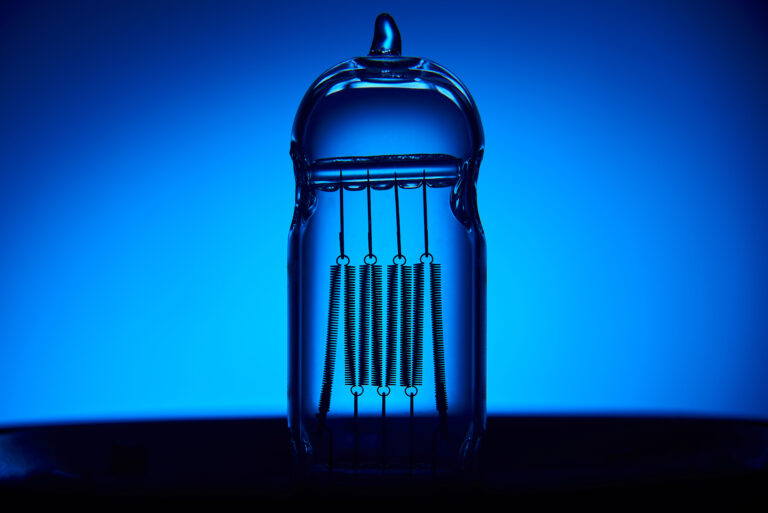
A D2 lamp, also known as a deuterium lamp, is a specialized ultraviolet light source used in analytical instruments such as UV-Vis spectrophotometers, HPLC UV detectors, diode array detectors, and other optical measurement systems. The name “D2” refers to molecular deuterium, a stable isotope of hydrogen used inside the lamp to generate a continuous ultraviolet emission spectrum.
In analytical laboratories, the D2 lamp plays a critical role because it provides the UV radiation needed for absorbance measurements, chromatographic detection, spectral scanning, and quantitative analysis. Deuterium lamps are especially important in the ultraviolet region, typically below 400 nm, where many chemical compounds absorb light and can therefore be detected or quantified. Shimadzu describes deuterium lamps as UV light sources used at short emission wavelengths of 400 nm or less.
For laboratories working with pharmaceutical analysis, environmental testing, chemical research, biotechnology, food testing, and quality control, a stable D2 lamp is not just a consumable. It is a key component that affects signal stability, sensitivity, baseline noise, and overall analytical confidence.
How Does a D2 Lamp Work?
A D2 lamp operates by creating an electrical discharge through low-pressure deuterium gas. When electrical energy excites the deuterium molecules, the lamp emits a broad and continuous spectrum of ultraviolet light. This makes it highly suitable for UV absorbance measurements and optical detection in analytical instruments.
Unlike visible light sources, a D2 lamp is optimized for the ultraviolet region. In many UV-Vis spectrophotometers, the D2 lamp is used together with a tungsten or halogen lamp. The D2 lamp covers the UV range, while the tungsten or halogen lamp is used mainly for the visible and near-infrared ranges. This combination allows the instrument to measure across a broad wavelength range.
In HPLC systems with UV or diode array detection, the D2 lamp acts as the main UV source. Agilent explains that HPLC detector lamps are key components of the detector optical unit and contribute to intensity, sensitivity, and stability.
Why Is a D2 Lamp Important in Analytical Laboratories?
The performance of a D2 lamp directly affects the quality of UV-based analytical measurements. When the lamp is stable and operating correctly, the instrument can produce reliable absorbance readings, consistent chromatographic peaks, and reproducible quantitative results.
A weak, aging, unstable, or incompatible D2 lamp may cause several analytical problems, including:
- Reduced signal intensity
- Increased baseline noise
- Poor detection sensitivity
- Drifting baselines
- Inconsistent absorbance values
- Failed instrument diagnostics
- Reduced reproducibility between runs
- Lower confidence in quantitative results
In routine quality control laboratories, these issues can interrupt workflows and cause delays in sample analysis. In regulated environments, such as pharmaceutical QC, lamp performance can also affect method reliability and instrument qualification processes.
Common Applications of D2 Lamps
D2 lamps are used in a wide range of analytical instruments and laboratory workflows. Their main advantage is their ability to provide stable ultraviolet light for absorbance-based measurements.
UV-Vis Spectrophotometry
In UV-Vis spectroscopy, a D2 lamp is commonly used as the ultraviolet light source. The instrument passes UV light through a sample and measures how much light is absorbed at specific wavelengths. This technique is widely used for concentration measurements, purity checks, reaction monitoring, and material characterization.
HPLC UV Detection
In high-performance liquid chromatography, the D2 lamp is used inside UV detectors and diode array detectors. As compounds elute from the HPLC column, the detector measures their UV absorbance. This allows laboratories to identify and quantify compounds based on their chromatographic retention time and absorbance response.
Diode Array Detection
In DAD or PDA detectors, the D2 lamp provides broadband UV light, allowing the detector to collect absorbance data across multiple wavelengths. This is valuable for peak purity analysis, spectral comparison, and method development.
Pharmaceutical Quality Control
Pharmaceutical laboratories often rely on UV-Vis and HPLC methods for assay testing, impurity analysis, dissolution testing, and stability studies. A stable D2 lamp supports consistent results in these demanding workflows.
Environmental and Chemical Testing
D2 lamps are also used in methods that analyze water samples, pollutants, chemical residues, and industrial compounds. In these applications, reliable UV detection helps laboratories identify compounds at defined wavelengths.
D2 Lamp vs Tungsten Lamp
Many UV-Vis instruments use both a D2 lamp and a tungsten or halogen lamp. Each light source covers a different part of the spectrum.
| Feature | D2 Lamp | Tungsten / Halogen Lamp |
|---|---|---|
| Main spectral range | Ultraviolet | Visible and near-infrared |
| Typical use | UV absorbance measurements | Visible absorbance measurements |
| Common instruments | UV-Vis, HPLC UV detector, DAD/PDA | UV-Vis spectrophotometers |
| Main advantage | Strong UV output and stability | Strong visible light output |
| Typical wavelength role | Below approximately 400 nm | Above the UV range |
The D2 lamp is therefore essential when the analytical method depends on ultraviolet absorbance. A tungsten or halogen lamp cannot replace the D2 lamp in UV-based measurements because it does not provide the same UV output.
When Should a D2 Lamp Be Replaced?
A D2 lamp should be replaced when it reaches the end of its operating life or when its performance no longer meets instrument requirements. Many manufacturers specify a typical lamp lifetime, often around 2,000 operating hours, although this varies by model and instrument. Shimadzu lists a 2,000-hour operating life for many deuterium lamp models, with exceptions for specific instruments.
Common signs that a D2 lamp may need replacement include:
- Low lamp energy
- Instrument warning messages
- Failed wavelength or energy diagnostics
- High baseline noise
- Poor sensitivity
- Unstable absorbance readings
- Longer warm-up time
- Irregular chromatographic response
- Reduced signal-to-noise ratio
Laboratories should not wait for a complete lamp failure before replacement. In many analytical workflows, preventive replacement is preferable because it reduces the risk of unexpected downtime and protects the consistency of validated methods.
How to Choose the Right D2 Lamp
Choosing the correct D2 lamp requires more than matching the general term “deuterium lamp.” Compatibility with the instrument model is critical. A lamp that is not designed for the specific instrument may affect alignment, output intensity, safety, diagnostics, and measurement stability.
Before purchasing a D2 lamp, laboratories should check:
1. Instrument Compatibility
The lamp must match the exact instrument brand and model. UV-Vis spectrophotometers, HPLC UV detectors, and diode array detectors often require model-specific lamps.
2. Lamp Type and Connector
Different instruments use different lamp housings, connectors, cable designs, and mounting configurations. Even if the lamp technology is similar, the physical format must be compatible.
3. Optical Alignment
In many instruments, lamp positioning is critical. A lamp designed for the correct optical system helps maintain proper light path alignment and detector performance.
4. Lifetime Specification
The expected lamp lifetime should match the laboratory’s workload. High-throughput laboratories may need to monitor operating hours more closely.
5. Stability and Output Intensity
For sensitive analytical methods, lamp stability and UV intensity are extremely important. High-quality lamps help maintain consistent detector response and reduce baseline noise.
6. Original vs Compatible Replacement
Some laboratories prefer original manufacturer lamps, while others use high-quality compatible lamps. The decision should be based on instrument requirements, analytical risk, method sensitivity, quality procedures, and procurement policy.
D2 Lamp Performance and Analytical Accuracy
The D2 lamp does not work alone. It is part of a larger optical system that includes mirrors, slits, monochromators, gratings, flow cells, lenses, detectors, and electronic signal processing. However, the lamp is the starting point of the measurement. If the light source is unstable, the entire optical measurement can be affected.
In HPLC UV detection, poor lamp performance can reduce peak height, affect integration quality, and make low-concentration compounds harder to detect. In UV-Vis spectrophotometry, poor lamp output may reduce absorbance accuracy, especially at low wavelengths where UV energy is essential.
This is why lamp quality, correct installation, warm-up time, and regular maintenance are important parts of analytical instrument care.
Best Practices for D2 Lamp Maintenance
To maintain reliable performance, laboratories should follow the manufacturer’s instructions for lamp use and replacement. General best practices include:
- Track lamp operating hours
- Replace the lamp before critical failure
- Avoid unnecessary on/off cycles if the instrument manufacturer recommends continuous operation during work sessions
- Allow the lamp to warm up properly before analysis
- Use the correct replacement lamp for the instrument model
- Avoid touching optical surfaces during installation
- Run instrument diagnostics after replacement
- Document lamp replacement in laboratory maintenance records
For laboratories operating under quality systems, every lamp replacement should be traceable. This may include the replacement date, lamp part number, instrument serial number, operating hours, technician name, and post-replacement diagnostic results.
D2 Lamp in HPLC Systems
In HPLC, the D2 lamp is especially important in UV and DAD detectors. The detector depends on a stable UV source to measure compounds as they pass through the flow cell. If lamp intensity decreases, the detector may still function, but sensitivity and signal quality can suffer.
A reliable D2 lamp supports:
- Stable chromatographic baselines
- Consistent peak response
- Better signal-to-noise ratio
- More reliable quantification
- Improved method reproducibility
- Better performance in low-level detection
For laboratories running routine HPLC methods, especially in pharmaceutical, chemical, or environmental testing, D2 lamp replacement should be part of the preventive maintenance program.
D2 Lamp in UV-Vis Spectrophotometers
In UV-Vis spectrophotometers, the D2 lamp provides the UV light required for measurements at short wavelengths. Many compounds absorb strongly in the UV region, so a stable lamp is essential for accurate measurements.
Applications may include:
- DNA and protein absorbance measurements
- Pharmaceutical assay testing
- Chemical concentration analysis
- Reaction monitoring
- Purity assessment
- Material characterization
- Water and environmental analysis
When the lamp ages, the instrument may struggle to maintain stable energy in the UV range. This can lead to inconsistent absorbance readings or reduced confidence in low-wavelength measurements.
Common Problems Related to D2 Lamps
Low Energy
Low lamp energy is one of the most common signs of aging. The instrument may display a warning or fail an energy test.
Baseline Noise
A weak or unstable lamp may increase baseline noise, especially in HPLC detectors. This can make small peaks harder to detect.
Baseline Drift
Lamp instability can contribute to drift during long analytical runs. However, drift may also come from temperature changes, mobile phase issues, detector contamination, or flow cell problems.
Failed Diagnostics
Many modern analytical instruments include built-in lamp diagnostics. If the lamp fails these tests, replacement may be required.
Reduced Sensitivity
When UV output decreases, the detector may produce weaker signals. This can affect quantitative results and detection limits.
How to Reduce Downtime Caused by D2 Lamp Failure
Unexpected lamp failure can delay laboratory work, especially when the instrument is used for routine QC or time-sensitive analysis. To reduce downtime, laboratories should:
- Keep a compatible spare lamp in stock
- Monitor lamp hours regularly
- Replace lamps before high-priority analytical campaigns
- Include lamp replacement in preventive maintenance schedules
- Train staff on correct replacement procedures
- Verify instrument performance after installation
For busy laboratories, keeping a spare D2 lamp is often a practical decision because it prevents a small consumable issue from stopping an entire analytical workflow.
FAQ: D2 Lamp
What does D2 lamp mean?
A D2 lamp is a deuterium lamp. It is an ultraviolet light source that uses deuterium gas to generate stable UV radiation for analytical instruments such as UV-Vis spectrophotometers and HPLC UV detectors.
What is a D2 lamp used for?
A D2 lamp is used as a UV light source in instruments that measure absorbance in the ultraviolet region. Common applications include UV-Vis spectroscopy, HPLC UV detection, diode array detection, pharmaceutical testing, chemical analysis, and environmental analysis.
How long does a D2 lamp last?
The lifetime depends on the manufacturer, lamp type, and instrument model. Many D2 lamps are rated around 2,000 operating hours, but some models may have shorter or different specifications. Always check the instrument manual or lamp documentation before replacement.
Can I use any D2 lamp in my instrument?
No. A D2 lamp must be compatible with the exact instrument model. The wrong lamp may not fit, may not align correctly, or may affect detector performance. Always verify the part number, connector, housing, and instrument compatibility.
What happens when a D2 lamp becomes weak?
A weak D2 lamp can cause low UV energy, unstable readings, increased baseline noise, poor sensitivity, and failed instrument diagnostics. In HPLC, it may reduce peak response and affect quantitative reliability.
Is a D2 lamp used for visible light?
A D2 lamp is mainly used for ultraviolet light. In UV-Vis instruments, visible light is usually provided by a tungsten or halogen lamp, while the D2 lamp covers the UV region.
Why is D2 lamp stability important?
Lamp stability affects the quality of the optical signal. A stable lamp helps produce consistent absorbance readings, reliable chromatographic peaks, lower noise, and better reproducibility in analytical methods.
Professional Support for Analytical Laboratories
Choosing the right D2 lamp is important for maintaining reliable performance in UV-Vis spectrophotometers, HPLC detectors, and other analytical instruments. The correct lamp should match the instrument model, the optical design, the laboratory workflow, and the required analytical sensitivity.
For laboratories that depend on accurate UV measurements, D2 lamp selection and replacement should be treated as part of the overall instrument maintenance strategy. A high-quality, compatible deuterium lamp helps protect measurement stability, reduce downtime, and support dependable analytical results.
Need help choosing a suitable D2 lamp or analytical instrument consumable? Contact Ophir Analytical for professional guidance and support for laboratory analytical systems.